19.07.2026 – How are flamingos ringed?
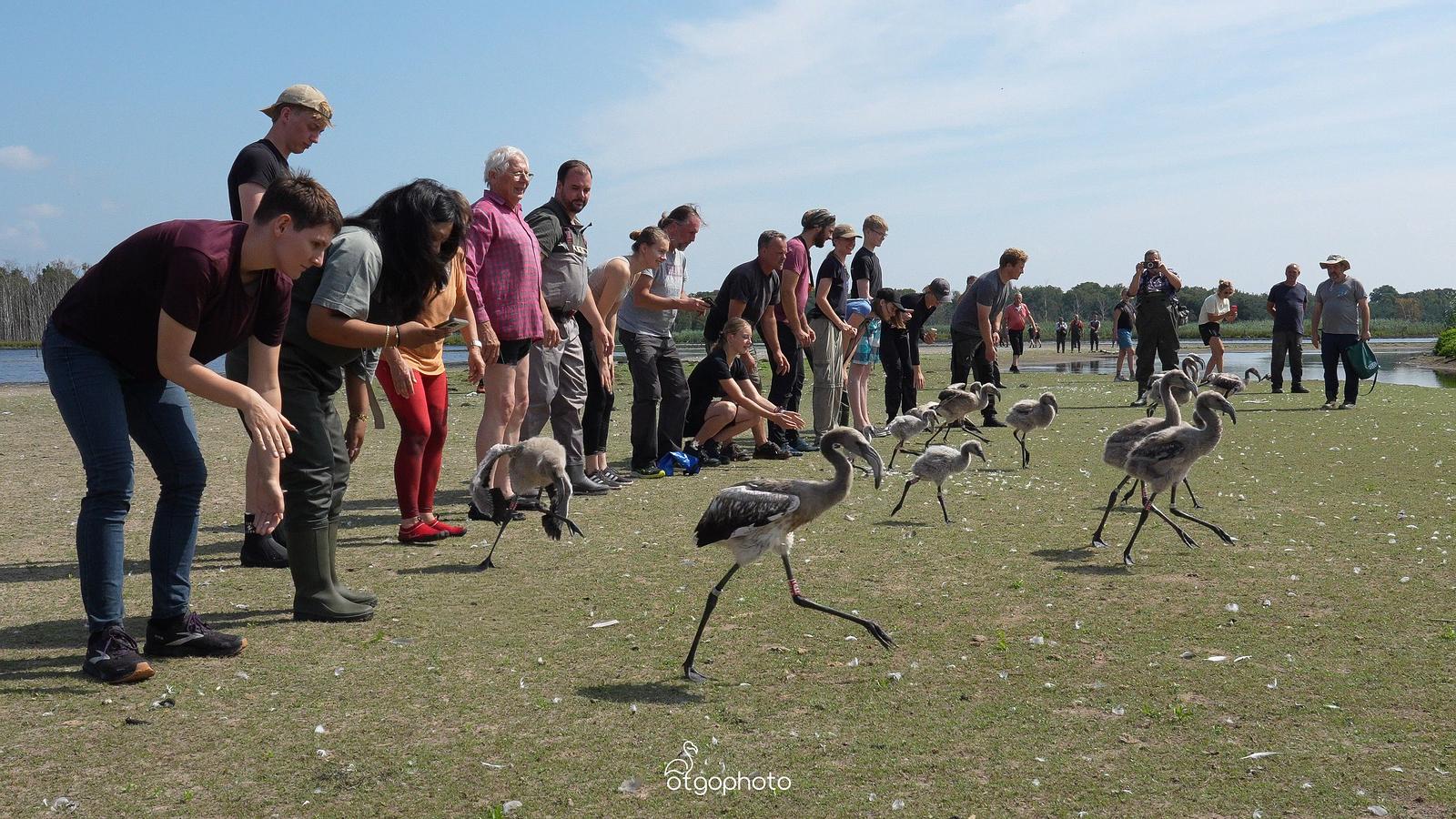
Friday, 17 July, was a special day that many flamingo enthusiasts had been looking forward to—especially Erik Ottema of Otgophoto. Following a successful breeding season, a special ringing event took place at the Zwillbrocker Venn, during which 16 flamingo chicks were fitted with identification rings.
The ringing was organised by the Biological Station Zwillbrock and carried out by a team of ornithologists, biologists and dedicated volunteers. Each chick received a unique plastic leg ring with its own identification number. These rings make it possible to monitor individual flamingos for many years. Observations of their movements, breeding success, behaviour, migration and social relationships provide valuable information for scientific research and conservation.
For Erik Ottema, the event marked another memorable milestone. For many years he has been documenting the ringed flamingos. Almost every day he records ring numbers, not only at the Zwillbrocker Venn but also at other locations where the birds are observed. Thanks to his long-term dedication, a unique database has been created, offering remarkable insights into the lives of these extraordinary birds.
The chicks are currently still living in the so-called "flamingo kindergarten". In this nursery, the young flamingos remain together in one large group where safety comes first. They rest, preen, feed and learn from one another. One or more adult flamingos usually stay nearby to guard the group. These are not always the biological parents, as other adult flamingos also help care for the chicks.
The chicks are still fed with crop milk, often referred to as flamingo milk, a highly nutritious secretion produced by both parents. This food is essential for healthy growth and development. The ringed chicks are currently between two and eight weeks old.
Now that every chick has its own identification ring, Erik Ottema can follow their social relationships much more accurately. It also becomes easier to match parents with their offspring. Research will continue throughout the wintering season. Together with Rita Swiersta and many other observers, new knowledge about this remarkable flamingo population continues to grow each year.
This research is important not only for the flamingos themselves, but also for understanding the health of the entire ecosystem in which they live. Every ring that is read and every observation contributes to a better understanding of these fascinating birds and helps ensure the long-term conservation of this unique population. This is especially valuable because many misconceptions about the Zwillbrocker Venn flamingos still exist. Long-term research and careful documentation help separate facts from assumptions.
To continue this valuable research in the future, Erik Ottema is looking for cooperation with organisations, researchers and other interested partners. Financial support is also greatly appreciated. It will help continue and expand this long-term research programme so that this unique flamingo population can be monitored for many years to come.